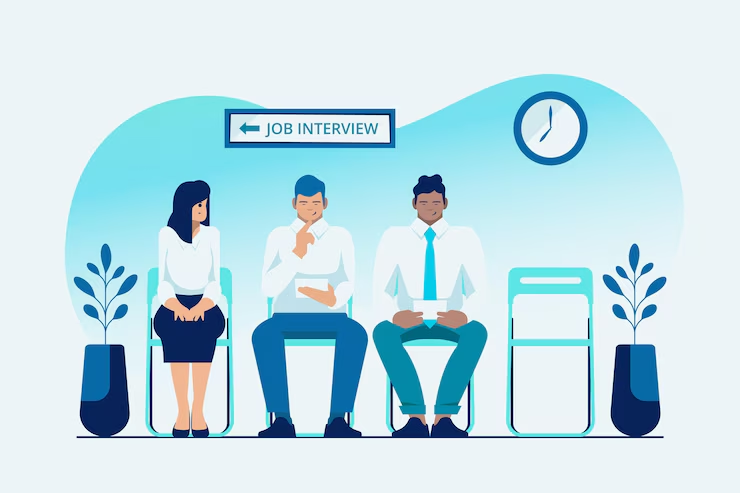
Candidates for jobs desire to be chosen during the interview process. The goal of hiring managers and recruiters is to quickly fill the position with the best candidate. Interviewer bias, however, can occasionally cause the “right person” to be overlooked. Both recruiting managers and candidates find it problematic. In this blog, we’ll examine interviewer bias in further detail, including its definition, types, and strategies for minimizing it during the hiring process.
What is interviewer bias?
Interview bias arises when the interviewer evaluates a candidate based on unspoken (and occasionally unconscious) criteria in addition to their abilities and competencies, which reduces the interview’s objectivity. For example, a candidate may be turned down by an interviewer just because they did not make enough eye contact, had a “good handshake,” or crossed their arms during the interview.
Unconscious bias like this during interviews frequently results in poor hiring choices and high turnover rates.
Different forms of interviewer bias
1. First impressions
Instead of a candidate who seems uncomfortable and has sweaty palms, you might choose the one who walks in with confidence and shakes hands firmly. This kind of first impression prejudice can weed out good individuals, unless the job involves a lot of meeting new people (like a sales role).
2. Bias in nonverbal communication
Are you evaluating applicants more on their body language than their abilities? Candidates who are neurodivergent or come from cultures that don’t match your preferences for body language may be rejected as a result of this bias. Keep in mind that people with autism might not look you in the eye, utilize stims to stay calm, or exhibit other seemingly unusual body language. It does not imply that they lack qualifications.
While someone from a culture where making eye contact is a show of respect might stare squarely at you, someone from a culture that defers to authority might glance down as you speak.
3. Effect of contrast
Does the second candidate appear particularly powerful if the first was weak? Candidates are compared to one another rather than to a standard. Strong applicants who interview after other strong candidates are disadvantaged compared to mediocre candidates who interview after underperforming candidates.
4. The halo effect
You can be so preoccupied with the candidate’s outstanding talk that you conclude they are superior in every way. This evaluation of their qualifications and employment experience is unfair. Don’t let one outstanding feature of their résumé overshadow their shortcomings.
5. The horn effect
In contrast to the halo effect, if a candidate performs poorly in one area, you think they perform poorly in all of them. Even if a candidate is an excellent programmer, you might dismiss them if they use poor grammar in their cover letter. Grammar shouldn’t be a major component of the appraisal if it isn’t a requirement of the job.
6. Cultural chatter
When a candidate tries to impress you instead of sharing their legitimate preferences, and you fail to notice, that is an example of this kind of prejudice. You don’t learn anything about the candidate, even though they might support a particular viewpoint, since it’s the politically right one. If a candidate states, “I don’t care if I work in the office or from home,” It’s unlikely to be accurate. It’s acceptable if the job is entirely on-site, but if it’s open to both, you want to know if the applicant is comfortable with that.
These are but a handful of the many forms of interviewer bias that may affect your hiring and selection procedures.
How to prevent interviewer bias during the hiring process
You can prevent bias in your interviews by being aware of these biases. Since many hiring managers don’t interview job prospects very often, they need help conducting bias-free interviews.
1. Blind the Resume Review Process
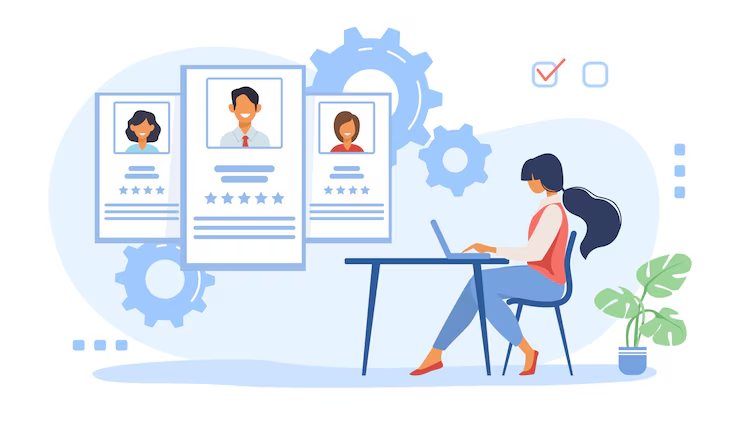
One powerful way to reduce bias is to remove personal details from resumes before reviewing them. Things like name, photo, age, gender, and even college names can unconsciously influence decisions. When recruiters only see skills, experience, and achievements, they focus more on capability rather than background. This helps prevent assumptions linked to ethnicity, social class, or gender. Blind screening forces you to evaluate what truly matters, whether the person can perform the job well. It creates a more equal starting point for every candidate.
2. Ask for Real Work Samples Instead of Impressions
Sometimes recruiters rely too much on how someone “sounds” in an interview. A better approach is to ask for practical work samples or short job-related tasks. For example, ask a marketer to write a sample campaign idea or a developer to solve a coding problem.
When you evaluate actual work, personal bias reduces automatically. You start judging output instead of personality. This method makes the hiring process more skill-based and less emotional. Real work speaks louder than confident talk.
3. Keep Written Notes During Interviews
Memory can be biased. After interviewing several candidates, it becomes easy to mix impressions and forget details. Writing structured notes during each interview helps you focus on facts rather than feelings. Instead of writing “Great personality,” note specific examples like “Explained project results clearly with data.”
Clear documentation helps you compare candidates fairly later. It also forces you to justify your decisions logically. When decisions are based on written evidence, bias has less room to influence.
4. Delay Discussion Until Everyone Finishes Scoring
In panel interviews, strong personalities can influence others. If one interviewer says, “I really liked her,” others may unconsciously agree. To avoid this, ask each interviewer to score the candidate independently before discussing opinions. This prevents groupthink and peer pressure.
Once everyone shares their individual evaluation, the final decision becomes more balanced. Independent scoring encourages honest thinking. It ensures that one loud voice does not control the outcome.
5. Regularly Review Your Hiring Patterns
Bias can hide in long-term patterns. Take time to analyze your hiring data. Are you mostly hiring from the same background, gender, or college group? Are certain types of candidates consistently rejected? Looking at trends can reveal unconscious preferences. When recruiters review data honestly, they become more aware of repeated patterns.
Awareness creates accountability. And accountability leads to fairer hiring decisions over time.
Conclusion
Hiring bias is not always loud or obvious. It is often silent, subtle, and unintentional. Recruiters may genuinely believe they are being fair while unconscious preferences influence their choices.
The goal is not to blame recruiters. The goal is to create awareness. When we understand unspoken hiring biases like similarity bias, prestige bias, confidence bias, appearance bias, and culture fit bias, we can start making better decisions. Fair hiring is not about being perfect. It is about being conscious. It is about slowing down, questioning assumptions, and focusing on real ability.
When companies reduce bias, they don’t just become more ethical; they become stronger, smarter, and more innovative. Do you want personalised tips on how to avoid hiring bias by recruiters? Then, feel free to avail our FREE 15-minute career counselling call.
Visit EnrichMyCareer for more information.
Frequently Asked Questions
1. Why is hiring bias often unspoken or unnoticed?
Most hiring bias is unconscious. Recruiters usually don’t wake up thinking they will be unfair. Bias happens automatically because of personal experiences, comfort zones, and social conditioning. Since it feels natural, people rarely question it. That’s why it often goes unnoticed and unspoken. Awareness and structured processes are needed to identify and reduce it.
2. Can small companies also struggle with hiring bias?
Yes, absolutely. Hiring bias is not limited to large corporations. In fact, small companies may face it more because hiring decisions are often made by one or two people. Without structured processes, decisions can rely heavily on personal judgment. Even informal conversations can influence outcomes. Bias can happen anywhere humans are making decisions.
3. What is the first step to reducing hidden hiring bias?
The first step is self-awareness. Recruiters need to pause and question their own decisions. Ask yourself why you prefer one candidate over another. Is it based on skills and evidence, or comfort and similarity? Once you start noticing your patterns, you can make conscious changes. Awareness is the foundation of fair hiring.

A content writer with a passion for crafting engaging content. Dedicated to continuous learning and innovative, excels at adapting diverse writing styles.