The job market is changing faster than ever, and one of the biggest reasons behind this shift is Artificial Intelligence (AI). From automating routine tasks to helping companies make better decisions, AI is transforming how businesses operate. As a result, what interviewers look for in candidates is also changing.
Earlier, interviews mainly focused on qualifications, marks, and technical knowledge. While these still matter, they are no longer enough. Today, employers want candidates who can work alongside AI, think creatively, and adapt to new challenges.

1. Skills Over Degrees
In the past, having a strong academic background was often the main requirement for getting a job. But today, AI has made information easily accessible, and many technical tasks can be automated. Because of this, companies are shifting their focus from degrees to skills.
Interviewers now look for what you can actually do, not just what you have studied. They want to see practical knowledge, problem-solving ability, and real-world application of skills. For example, instead of just asking about your degree, they may ask you to complete a task or solve a real-life problem. This helps them understand your true capabilities.
2. Ability to Work With AI
AI is not here to replace humans completely; it is here to work with them. This means employers are looking for candidates who know how to use AI tools effectively.
You don’t need to be an expert, but you should be comfortable using technology. Interviewers may ask how you use tools for research, productivity, or problem-solving. They want to know if you can use AI to improve your work instead of fearing it. Being open to learning new tools gives you a strong advantage.
3. Creative Thinking is More Important
AI is very good at handling data and performing repetitive tasks, but it still struggles with creativity. This is why creativity has become a highly valued skill.
Interviewers now look for candidates who can think differently, come up with new ideas, and approach problems in unique ways. They may ask questions that test your thinking rather than your memory. For example, they might give you a situation and ask how you would handle it. Your ability to think creatively can set you apart.
4. Strong Communication Skills
Even in a world driven by technology, communication remains a key skill. AI can process information, but it cannot fully replace human interaction.
Interviewers look for candidates who can express their ideas clearly and confidently. This includes speaking, writing, and listening skills. You may be asked to explain your thoughts, present ideas, or discuss a topic. Good communication helps in teamwork, leadership, and problem-solving, making it a must-have skill.
5. Adaptability and Learning Mindset
AI is constantly evolving, which means the skills required for jobs are also changing. Because of this, interviewers value candidates who are adaptable and willing to learn.
They want to know if you can handle change and keep improving yourself. You may be asked about how you learned a new skill or handled a difficult situation. Showing a growth mindset that you are open to learning and improving can make a strong impression.
6. Problem-Solving Ability
AI can provide data and suggestions, but it still needs human judgment to solve complex problems. This is why problem-solving skills are more important than ever.
Interviewers often ask scenario-based questions to see how you think. They are interested in your approach, not just the final answer. They want to understand how you analyze situations, consider options, and make decisions. Being able to solve problems effectively shows that you can handle real challenges at work.
7. Emotional Intelligence Matters
AI cannot fully understand human emotions, which makes emotional intelligence a valuable skill. Employers need people who can work well with others, handle conflicts, and build relationships.
Interviewers may observe how you respond to questions, how you talk about teamwork, and how you handle pressure. Being calm, respectful, and understanding can leave a positive impression. Emotional intelligence helps create a healthy work environment and improves teamwork.
8. Focus on Real-World Experience
Instead of only relying on academic performance, interviewers now value real-world experience. This includes internships, projects, volunteering, or any practical work.
AI has made it easier to learn skills online, so employers expect candidates to apply what they learn. During interviews, you may be asked to share examples of your work. This helps interviewers see how you use your knowledge in real situations.
Conclusion
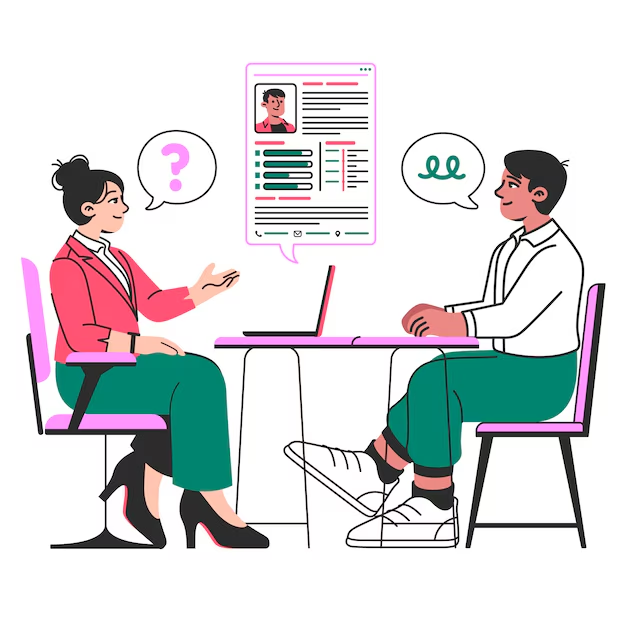
Artificial Intelligence is changing not just how we work, but also how we are evaluated during interviews. While technical knowledge is still important, it is no longer the only factor. Employers now look for a combination of skills, creativity, adaptability, communication, and problem-solving.
The key is to understand that AI is not your competition, but a tool that can help you grow. By developing skills that AI cannot replace, you can stay ahead in your career. Preparing for interviews today means focusing on who you are as a thinker, a learner, and a problem-solver. If you can show that you are ready to learn, adapt, and contribute, you will be well-prepared for the future of work. Want to crack modern interviews and stand out in the age of AI? Then, feel free to avail our FREE 15-minute call.
Visit EnrichMyCareer to learn how to build in-demand skills, prepare smarter, and stay ahead in today’s AI-driven job market.
Frequently Asked Questions
1. Do I need to learn AI to get a job?
You don’t need to become an expert in AI, but having basic knowledge of how it works and how to use AI tools can be helpful.
2. What is the most important skill for interviews today?
There is no single most important skill, but adaptability, problem-solving, and communication are highly valued in today’s interviews.
3. How can I prepare for AI-driven interviews?
Focus on building practical skills, learning how to use technology, improving communication, and practicing problem-solving. Staying curious and open to learning is also important.

Nishant is an Internationally Certified Career Coach, a Career Counsellor, an Education Consultant, a Soft Skills Trainer, and an ardent advocate of youth empowerment through personalized guidance, mentoring, and developmental interventions. He is also an International Economic Development and Business Consultant. Over the years, he has helped many students of different age groups and working professionals in discovering their true selves, setting appropriate career goals, and walking the right career paths.
Nishant is a mechanical engineering alumnus from R.V. College of Engineering, Bangalore. He has been widely featured in top media and also delivered talks at Cambridge University-UK and IIT-Guwahati among others. He has also delivered workshops at many reputed schools and colleges on various careers and skills-related topics.